
 login
 who are we?
 contact us
 qosheapp




The Gold-Silver Ratio and Industrial Realities: Navigating Modern Precious Metals Valuation


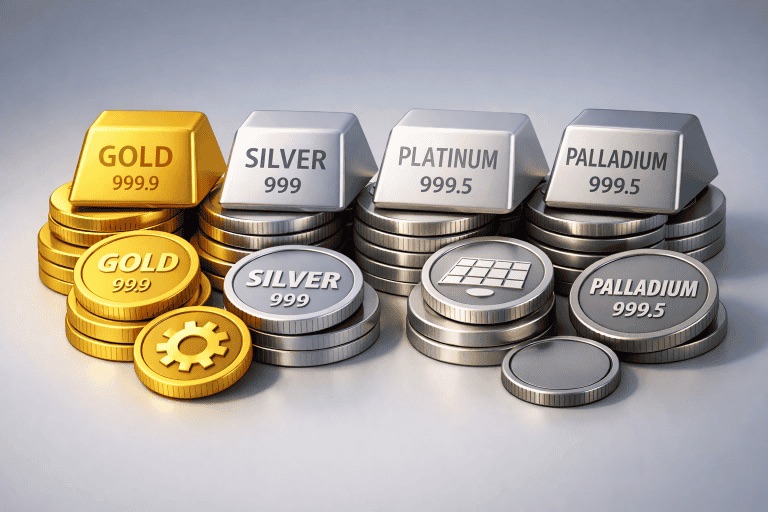
While sovereign wealth funds and institutional reserve managers consistently allocate capital toward sovereign gold reserves, seasoned precious metals strategists routinely monitor a secondary asset that exhibits distinct volatility and structural demand profiles: physical silver. Often termed the "poor man's gold," silver occupies a dual role in global trade, functioning simultaneously as an investment-grade monetary asset and an essential industrial input. For capital allocators evaluating entry points, cross-referencing benchmarks through a comprehensive platform like 961Today precious metals tracker provides the multi-asset clarity required to identify historic market dislocations.
Deconstructing the Gold-to-Silver Ratio (GSR)
The gold-to-silver ratio represents one of the oldest technical indicators in financial market history, measuring how many troy ounces of silver are required to purchase a single troy ounce of gold. Historically set by bimetallic monetary standards at roughly 15:1 or 16:1, modern floating regimes have observed wide structural swings ranging between 40:1 and upwards of 90:1 during periods of systemic liquidity stress.
A high ratio typically suggests that silver is undervalued relative to gold on a historical basis, whereas an aggressive compression in the ratio often signals strong industrial demand cycles or retail speculative fervor. To evaluate whether these ratio expansions reflect temporary pricing anomalies or broader macroeconomic trends, portfolio managers consistently track the wholesale gold price today against benchmark commodities to establish risk-weighted baseline expectations.
The Green Energy Transition and Inelastic Industrial Consumption
Unlike pure monetary bullion, where over 90% of excavated supply remains preserved in vaults, private collections, or jewelry, silver is largely consumed and transformed by modern manufacturing. Its unmatched electrical conductivity, thermal durability, and antimicrobial properties make it indispensable across rapid-growth technology sectors:
- Photovoltaic Solar Manufacturing: Modern high-efficiency TOPCon and heterojunction solar cells require substantially higher silver paste loadings per gigawatt of installed capacity compared to legacy photovoltaic technologies.
- Automotive Electrification: Electric vehicles (EVs) utilize significantly more silver per vehicle than internal combustion counterparts, relying on the metal for electronic control units, sensors, and charging battery interfaces.
- Semiconductors and Telecommunications: Next-generation computing clusters, satellite hardware, and high-frequency communication switches require consistent silver bonding wires and micro-coatings that cannot be readily substituted.
Because physical silver mining occurs predominantly as a secondary byproduct of copper, lead, and zinc extraction, primary miners cannot quickly ramp up supply in response to rising industrial demand. This supply inelasticity amplifies price discovery, making regular tracking of the silver ounce price today a crucial metric for evaluating physical deficit pressures within wholesale supply chains.
Paper Derivatives vs. Physical Vault Inventories
Similar to gold, price determination for silver primarily takes place across derivative exchanges through paper contracts and cleared futures. However, periods of prolonged structural deficits frequently strain physical warehouse inventories across major depository hubs, including the COMEX and the London Bullion Market Association (LBMA).
When physical fabrication demand outpaces mine output and recycling volumes, refinery premiums for minted bars and bulk grain widen beyond spot values. Understanding the divergence between paper sentiment and genuine physical delivery guarantees that capital managers do not mistake localized paper liquidation for genuine market exhaustion.
Strategic Allocation Takeaways for Balanced Portfolios
Incorporating silver alongside gold provides asymmetric upside during speculative commodity super-cycles, albeit with elevated annualized standard deviation. While sovereign bullion stabilizes purchasing power against systemic currency degradation, industrial precious metals offer leveraged participation in real-economy industrial expansion.
A prudent precious metals allocation balances these countervailing forces. By tracking multi-decade valuation multiples alongside transparent daily spot pricing, investors can capitalize on industrial demand shifts while maintaining the structural security offered by physical monetary reserves.
© qolumnist
 visit website